


Hey there! As a supplier of cold rolled steel coils, I often get asked about all sorts of technical stuff. One question that pops up quite a bit is, "What is the Poisson's ratio of cold rolled steel coils?" Let's dive right in and break this down.
First off, what the heck is Poisson's ratio anyway? Well, it's a measure of how a material behaves when it's stretched or compressed. When you pull on a piece of material, it not only gets longer in the direction you're pulling (the axial direction), but it also gets thinner in the directions perpendicular to the pull. Poisson's ratio is the ratio of the transverse strain (the change in thickness) to the axial strain (the change in length).
For cold rolled steel coils, Poisson's ratio is typically around 0.3. This means that for every unit of strain in the axial direction, there's about 0.3 units of strain in the transverse direction. But here's the thing - this value isn't set in stone. It can vary depending on a bunch of factors.
One of the big factors is the composition of the steel. Different alloys of steel have different Poisson's ratios. For example, the EN 10130 DC01 cold rolled steel coil, which is a popular choice in the market, has a Poisson's ratio that might be slightly different from other types due to its specific chemical makeup. The elements in the steel, like carbon, manganese, and silicon, can all affect how the steel responds to stress and strain.
The manufacturing process also plays a huge role. Cold rolling is a process where the steel is passed through rollers at room temperature to reduce its thickness and improve its surface finish. This process can introduce internal stresses and change the microstructure of the steel. These internal stresses can influence the Poisson's ratio. If the cold rolling is done with different pressures, speeds, or number of passes, the resulting Poisson's ratio can vary.
Another aspect to consider is the heat treatment after cold rolling. Sometimes, cold rolled steel coils are heat treated to relieve internal stresses or to change their mechanical properties. Heat treatment can alter the crystal structure of the steel, which in turn can affect Poisson's ratio. For instance, annealing, a common heat treatment process, can make the steel more ductile and might change its Poisson's ratio compared to the as - cold - rolled state.
Now, why does Poisson's ratio matter when it comes to cold rolled steel coils? Well, it's crucial in engineering applications. When engineers design structures or components using cold rolled steel coils, they need to know how the steel will deform under load. For example, if they're designing a car body panel made from AISI Sheet Metal 304 Steel Coil, they need to account for the Poisson's ratio to ensure that the panel doesn't warp or crack when it's subjected to various forces during normal use.
In construction, cold rolled steel coils are used in everything from building frames to roofing. Understanding the Poisson's ratio helps architects and engineers design structures that are safe and stable. If they underestimate the transverse strain due to an incorrect Poisson's ratio, the structure might be more prone to failure.

When it comes to our cold rolled steel coil products, like the cold rolled steel coil strip sheet coil, we make sure to provide as much technical information as possible to our customers. We test our products regularly to determine the most accurate Poisson's ratio and other mechanical properties. This way, our customers can make informed decisions when using our steel coils in their projects.
We know that different industries have different requirements. For the automotive industry, they need steel coils with precise mechanical properties to meet safety and performance standards. The electronics industry, on the other hand, might need steel coils with specific electrical conductivity and corrosion resistance in addition to the right Poisson's ratio.
As a supplier, we're constantly working to improve our products. We invest in research and development to find ways to optimize the Poisson's ratio and other properties of our cold rolled steel coils. This not only benefits our customers but also helps us stay competitive in the market.
If you're in the market for cold rolled steel coils, you might be wondering how to choose the right one based on Poisson's ratio. First, you need to understand the requirements of your project. If your project involves a lot of bending or stretching, you might want a steel coil with a Poisson's ratio that allows for more flexibility. On the other hand, if your project requires high rigidity, a steel coil with a different Poisson's ratio might be more suitable.
It's also a good idea to talk to our experts. We have a team of professionals who can help you understand the technical details and choose the right cold rolled steel coil for your specific needs. We can provide you with samples and test results so that you can make an informed decision.
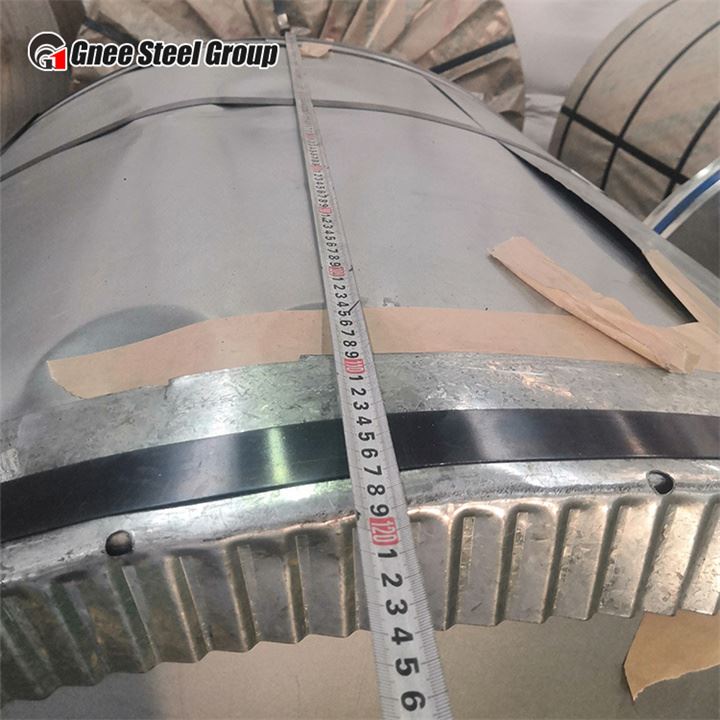
In conclusion, Poisson's ratio is an important property of cold rolled steel coils. It affects how the steel deforms under load and is crucial in engineering and construction applications. At our company, we're committed to providing high - quality cold rolled steel coils with accurate and well - characterized Poisson's ratios. If you're interested in our products or have any questions about Poisson's ratio or other technical aspects, don't hesitate to reach out to us. We're here to help you with your procurement needs and ensure that you get the best cold rolled steel coils for your projects.
References
- "Materials Science and Engineering: An Introduction" by William D. Callister Jr. and David G. Rethwisch
- "Mechanical Properties of Materials" by George E. Dieter
- Industry standards and research papers on cold rolled steel coils and their properties
