Why Choose Us


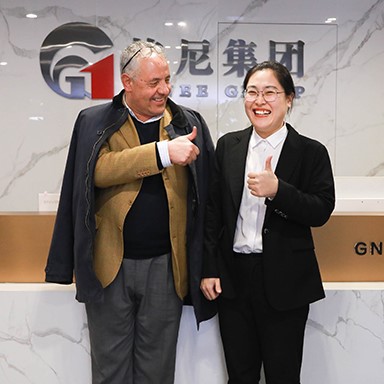
Gnee Steel (tianjin) Co., Ltd. is a comprehensive electrical engineering company, established in 2008, with registered capital of 20 million yuan, fixed assets of 50 million yuan, more than 200 employees, and an annual output value of nearly 100 million yuan.

We have our own transformer manufacturing base, producing a full range of transformers, including 5000 KVA 35KV distribution transformers, 100 MVA 230KV power transformers, 10 MVA 35KV dry-type transformers, rectifier transformers, electric furnace transformers, solar inverter transformers and other special application transformers. We have obtained ISO9001, ISO14001, OHSAS18001 certifications and KEMA, CESI test reports for large transformers.


GNEE transformer products have six major advantages

1. Low loss, high-grade silicon steel sheets are used
The iron core uses Shougang high-grade silicon steel sheets, which are brand new and fully integrated. It adopts a rectangular cross-section three-phase five-column structure, and the no-load loss is reduced by three quarters compared to ordinary dry-type transformers.

2. Low temperature rise, the iron core uses brand new materials
The iron core uses brand new materials and high-grade silicon steel sheets, which greatly reduces the magnetic flux density and reduces the magnetostriction of silicon steel sheets during operation.

3. Long life, fully sealed structure
The transformer oil tank adopts a fully sealed structure. The oil tank and the tank edge can be connected or dead with bolts. The transformer oil does not come into contact with the air, which extends the service life.

4. High efficiency and strong overload capacity
The overload capacity is strong, and it can operate safely for a long time under 120% load.

5. Low noise. High-grade silicon steel sheets are selected. High-grade silicon steel sheets are selected, which greatly reduces the magnetic flux density, reduces the magnetostriction of silicon steel sheets during operation, and reduces noise.

6. Multiple specifications. The company produces a variety of transformers.
Mainly engaged in the production of oil-immersed power transformers, epoxy resin dry-type transformers, rectifier transformers and electric furnace transformers.

First 1234567 Last 1/8

What is Transformer

 
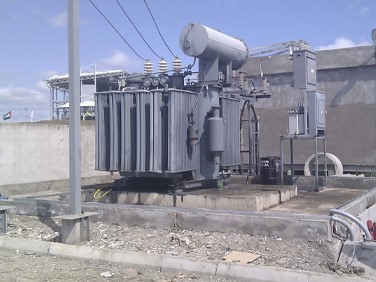
Oil immersed transformer

Contact us for a quote


The transformer is a device that transfers electric energy from one alternating-current circuit to one or more other circuits, either increasing (stepping up) or reducing (stepping down) the voltage. If you want to know the specifications and prices of transformer, please contact us!


Guess You Need

I hope you can find satisfactory products.

Box Type Transformer
1000 kva oil filled transformer
Dry type transformer
Oil filled distribution transformers


20KV Outdoor Cast Resin Dry Type Electrical Transformer

It consists of iron core made of silicon steel plates and epoxy resin cast coils.Insulation cylinder and other insulators between high and low windings are placed to increase electrical insulation. lts cushion blocks can support and restrain the coils, and its fasteners have anti-loose function.


High Voltage HT Electric Switchgear Substation Kiosk
Compact transformer (also can be called as Compact Substation, Prefabricated Substation) is suitable for business centers, schools, substations and etc, which can bematched flexibly, transported, installed and maintained easily. Also, it can save the space.


Low Voltage LT Draw Out Switchgear Equipment
GCK series low voltage draw out switchgear is applicable for three phase four wire/fivewire AC power system with rated operation voltage 380v, used for electric power receiving and feeding, reactive power compensation, electric energy calculation,lighting and motor centralized control at power plant, substation, mine enterprises, high buildings.


If you want to know about other transformers, please contact us to get the product catalog and price.


Hot-selling transformer products
Dry transformer
Dry Type Transformer
1000 kva oil filled transformer
Oil Immersed Transformer
Single phase pad mounted transformer
Pad Mounted Transformer
Pole mounted transformer
Pole Mounted Transformer
Power supply transformer
Amorphous Alloy Transformer
Substation power transformer
Substation Transformer
Types of Transformer


Step-Down Transformer
Step down Transformer is used in both Electronics and Electrical domain. A step-down transformer converts the primary voltage level to a lower voltage across the secondary output. This is achieved by the ratio of primary and secondary windings. For step-down transformers the number of windings is higher across the primary side than the secondary side. Therefore, the overall winding ratio of primary and secondary always remains more than 1.
In electronics, many applications run on 5V, 6V, 9V, 12V, 24V or in some cases 48V. To convert the single phase power outlet voltage 230V AC to the desired low voltage level, Step Down transformers are required. In instrumentation as well as in many electrical types of equipment, Step-Down transformer is the primary requirement for the Power section. They are also used in power adapters and cell phone charger circuits.
In electrical, step down transformers are used in electrical distribution system which works on very high voltage to ensure low loss and cost-effective solution for long distance power delivery requirements. To convert the high voltage to a low voltage supply line, Step down transformer is used.
Step-Up Transformer
Step Up transformer is exactly opposite of the step-down transformer. Step up transformer increase the low primary voltage to a high secondary voltage. Again it is achieved by the ratio of primary and secondary winding ratio. For the Step Up transformer, the ratio of the primary winding and the Secondary winding remains less than 1. That means the number turns in secondary winding is higher than the primary winding.
In electronics, step up transformers often used in stabilizers, inverters etc where low voltage is converted to a much higher voltage.
A step-up transformer is also used in Electrical power distribution. High voltage is required for power distribution related application. Step up transformer is used in the grid to step up the voltage level before the distribution.
Isolation Transformer
Isolation transformer does not convert any voltage levels. The Primary voltage and the secondary voltage of an isolation transformer always remain the same. This is because the primary and the secondary winding ratio is always equal to the 1. That means the number of turns in primary and secondary winding is same in isolation transformer.
The isolation transformer is used to isolate the primary and secondary. As discussed previously, the transformer does not have any electrical connections between primary and secondary, it is also used as an isolation barrier where the conduction happens only with the magnetic flux. It is used for safety purpose and to cancel noise transfer from primary to secondary or vice-versa.
Iron Core Transformer
Iron core transformer uses multiple soft iron plates as the core material. Due to the excellent magnetic properties of iron, the flux linkage of the iron core transformer is very high. Thus, the efficiency of the iron core transformer is also high.
The soft iron core plates can be available in multiple shapes and sizes. The coils of the primary and secondary wound or wrapped on a coil former. After that, the coil former is mounted in soft iron core plates. Depending on the core size and shapes, a different type of core plates is available in the market. Few common shapes are E, I, U, L, etc. The iron plates are thin, and multiple plates are bunched together to form the actual core. For example, E type cores are made with thin plates with a look of letter E. Iron core transformers are widely used and usually heavier in weight and shape.
Ferrite Core Transformer
A ferrite core transformer uses a ferrite core due to high magnetic permeability. This type of transformer offers very low losses in the high-frequency application. Due to this, ferrite core transformers are used in high-frequency application such as in switch mode power supply (SMPS), RF related applications, etc.
Ferrite core transformers also offer a different type of shapes, sizes depending on the application requirement. It is mainly used in electronics rather than electrical application. The most common shape in the ferrite core transformer is E core.
Toroidal Core Transformer
Toroidal core transformer uses toroid shaped core material, such as iron core or ferrite core. Toroids are ring or donut shaped core material and widely used for superior electrical performance. Due to the ring shape, the leakage inductance is very low and offers very high inductance and Q factors. The windings are relatively short and weight is much less than traditional, same rating transformers.


Transformer Application

Industry power supply, metallurgy industry, power substation

Dry type power transformer
Power pack transformer
Power electronic transformer
Power converter transformer


How to Choose Transformer


Define Your Load Characteristics
The first step in selecting a transformer is to define your load characteristics, such as the power rating, the voltage level, the frequency, the power factor, the harmonic content, and the load variation. These parameters will determine the size, the type, and the insulation class of the transformer that you need. For example, if you have a high-power load that operates at a low voltage, you will need a step-down transformer that can handle the high current and the low power factor. If you have a load that generates harmonics, you will need a transformer that can withstand the additional losses and heating effects.


Choose Your Transformer Type
The next step is to choose your transformer type, based on the application, the location, and the performance requirements. There are two main types of transformers: dry-type and liquid-filled. Dry-type transformers use air or gas as the cooling and insulating medium, while liquid-filled transformers use oil or synthetic fluids. Dry-type transformers are more suitable for indoor or urban installations, as they are safer, cleaner, and more compact. Liquid-filled transformers are more suitable for outdoor or rural installations, as they offer better cooling, higher efficiency, and longer life span.


Evaluate Your System Configuration
The third step is to evaluate your system configuration, such as the number and the arrangement of the transformers, the type and the length of the conductors, the presence and the location of the protective devices, and the grounding method. These factors will affect the voltage regulation, the short-circuit capability, the fault current level, and the reliability of your power system. For example, if you have a radial system with a single transformer, you will need a transformer that can provide adequate voltage regulation and fault current. If you have a parallel system with multiple transformers, you will need transformers that are identical and coordinated.


Consider Your Environmental Conditions
The fourth step is to consider your environmental conditions, such as the ambient temperature, the humidity, the altitude, the pollution, and the noise level. These factors will influence the cooling, the insulation, the corrosion, and the noise performance of your transformer. For example, if you have a high ambient temperature, you will need a transformer that can operate at a higher temperature rise and has a higher insulation class. If you have a high humidity, you will need a transformer that has a sealed or a nitrogen-filled tank to prevent moisture ingress.


Compare Your Maintenance Requirements
The fifth step is to compare your maintenance requirements, such as the frequency, the duration, the cost, and the availability of the maintenance services. These factors will affect the reliability, the availability, and the life cycle cost of your transformer. For example, if you have a low maintenance budget, you will need a transformer that has a low failure rate and a long service life. If you have a high maintenance availability, you will need a transformer that has easy access and replaceable parts.


Analyze Your Cost-Effectiveness
The final step is to analyze your cost-effectiveness, which is the balance between the initial investment, the operating expenses, and the benefits of your transformer. These factors will depend on the price, the efficiency, the losses, the depreciation, and the revenue of your transformer. For example, if you have a high initial investment, you will need a transformer that has a high efficiency and a low loss. If you have a high revenue potential, you will need a transformer that has a high availability and a low downtime.


Our Factory

Cast resin type transformer
Dry type transformer types
Oil immersed current transformer
Pad mounted transformer
Oil immersed distribution transformer
Oil immersed power transformer
Oil immersed self cooled transformer
Cast resin dry type transformer

Our factory covers an area of 33,000 square meters, with a total construction area of 6,100 square meters. There are currently 200 employees, including 18 technicians who have been engaged in the research and development of transformer products for many years, and 8 high-quality corporate managers. With the expansion of production scale and the increase of product varieties, it has now developed into a high-tech innovative enterprise that annual production capacity of more than 1000MVA, integrating the design, production and sales of open-type dry-type transformers, epoxy resin cast dry-type transformers, amorphous alloy transformers, and special transformers.


Our Service
 

We provide one-package service from consulting, quoting, manufacturing, installation, commissioning, training to after sale services, we aim to be your most reliable supplier as well as your best partner in business!

gnee
gnee group


Transformer Product Customer Cases


High power transformer
Electrical power transformers
Cooper power transformers
Industrial power transformers
Small power transformer
Underground power transformer
Power voltage transformer
Main power transformer


Transformer product packaging and transportation


Single phase pad mounted transformer
3 phase pad mounted transformer
 
Pad transformers
Padmounted transformers
Reconditioned pad mount transformers
Cooper pad mounted transformer
Frequently Asked Questions
 

Q: What are the factors for selecting transformer?

A: By considering factors such as power requirements, efficiency, load characteristics, environmental conditions, type of transformer, and size and weight, you can make an informed decision when selecting a transformer.

Q: What is transformer in simple words?

A: A transformer is a device that transfers electric energy from one alternating-current circuit to one or more other circuits, either increasing (stepping up) or reducing (stepping down) the voltage.

Q: What is the use of a transformer?

A: Transformers are used to change AC voltage levels, such transformers being termed step-up or step-down type to increase or decrease voltage level, respectively. Transformers can also be used to provide galvanic isolation between circuits as well as to couple stages of signal-processing circuits.

Q: What is transformer and work?

A: It is a device that transfers electric energy from one alternating current circuit to one or more circuits, either increasing or reducing the voltage. Transformer are used to reduce the voltage of conventional power circuit to operate low voltage devices.

Q: What is the difference between amorphous and silicon transformers?

A:Amorphous Core: Transformers with amorphous cores tend to produce less audible noise during operation compared to transformers with silicon steel cores, mainly due to their lower losses and reduced vibration.

Q: What transformer to use for 110 to 220?

A:A Step-Down transformer is needed when you want to use a 110V appliance in a 220V Country. We carry a wide range of 110 Volt and 220 / 240 Volt Step up and step down voltage converter transformers from 50 Watts to 20,000 Watts.

Q: What's inside a transformer?

A: Distribution transformers consist of a magnetic core made from laminations of sheet silicon steel (transformer steel) stacked and either glued together with resin or banded together with steel straps, with the primary and secondary wire windings wrapped around them.

Q: What is a three phase transformer?

A:Three-phase transformers are a type of transformers that are used to change voltages of electrical systems with three phases. There are different types of configurations, namely: star-star, delta-delta, star-delta, and delta-star.

Q: What are the types of transformer cores?

A: Transformers generally have one of two types of cores: Core Type and Shell Type. These two types are distinguished from each other by the manner in which the primary and secondary coils are placed around the steel core.

Q: How does a transformer work physics?

A: Transformers are used to increase or decrease the voltage of alternating currents. A transformer consists of two coils of wire wound on a metal core. An alternating voltage is applied to one coil (the primary coil). This causes a changing (alternating) magnetic field to be set up in the core.

Q: What types of transformer products do you have?

A: Power transformers, distribution transformers, dry type transformers, rectifier transformers, furnace transformers, solar inverter transformers, special transformers,cables, disconnectors, switchgears, etc.

Q: How does a transformer change voltage?

A: Transformers use electromagnetic induction to allow a change in voltage between their primary and secondary components. When an alternating current (AC) is applied to the primary coil, a differing magnetic field is created, which induces a voltage across the secondary coil.

Q: Why transformer is not used in DC?

A: This is because a transformer works on the principle of elctromagnetic induction, which requires a voltage source that changes with time (alternating source). Thus since a dc supply is unidirectuional, the transformer cannot work. Simple, no voltage or output.

Q: Why are transformers so heavy?

A: They are composed of 2 sets of copper wire windings wrapped around a laminated iron core. The weight of the transformer comes from the iron core and the copper wire. The larger the current the transformer is designed for the larger gauge the secondary winding needs to be.

Q: What is the core of a transformer?

A: A transformer core is a static device that provides a channel for magnetic flux to flow in a transformer. The core is constructed using thin strips of silicone steel. The silicon steel sheets are electrically isolated and coupled to reduce no-load losses in the transformer.

Q: What is a three phase current transformer?

A:This type of transformer is, in essence, three interconnected single phase transformers in a single housing – accomplished by either using a single “3 phase core” or three individual toroidal cores.

Q: What is the efficiency of a transformer?

A: The ratio of output power to input power is known as transformer efficiency. It measures how effectively a transformer converts DC electrical energy from one form to another. Transformer efficiency is measured in terms of percentages with a range of 97% to 99%.

Gnee Steel (Tianjin) Co., Ltd. is one of the most professional transformer manufacturers and suppliers in China, specialized in providing high quality products with low price. We warmly welcome you to wholesale cheap transformer in stock here and get free sample from our factory. Also, customized service is available.

Galvanized Corrugated Steel Sheet, ppgi roofing sheet, Dx51D Galvanized Steel Coil